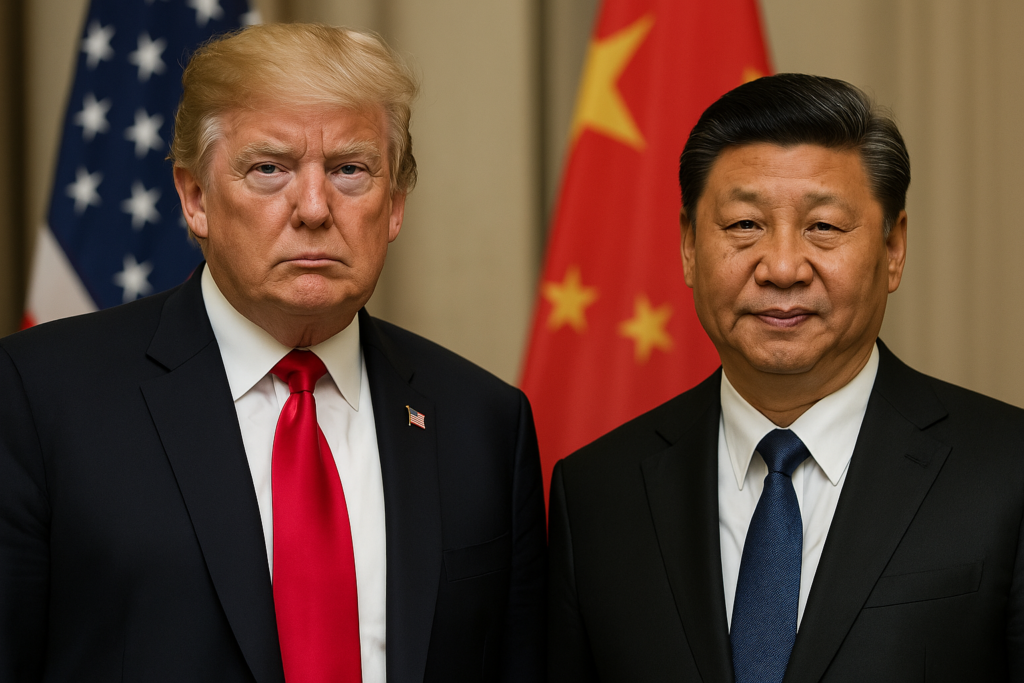
The US-China trade war has entered a critical phase, with the latest round of tariff hikes intensifying the ongoing tensions between the two global superpowers. Initiated during the Trump administration, the conflict over trade practices and economic dominance continues to shape global commerce and supply chains.
As tariffs rise on both sides, businesses—especially small and medium-sized enterprises—are feeling the pressure. American importers face higher costs on Chinese goods, which often translate to increased prices for U.S. consumers. On the Chinese side, many manufacturers that relied heavily on U.S. demand are now grappling with shrinking markets and uncertainty about the future.
One particular story has captured global attention and humanized the crisis. A small business owner from Jiangsu, China, commented on a news report about the tariffs:
“I am a small business owner in Jiangsu, China. Due to Trump’s tariff policies, we are set to lose 70% of our U.S. business. However, we still have over 100 employees to support. Fortunately, the capital we’ve accumulated over the past decade is sufficient to cover four years’ worth of salaries. We will use these four years to explore new markets together with our entire team. We will never abandon a single employee, because I firmly believe that the Chinese people are unbreakable!“
This comment highlights a rarely seen perspective in the US-China trade war — the determination of small businesses to survive despite geopolitical shifts. It reveals the human cost of the conflict and the resilience of entrepreneurs who refuse to give up on their workforce.
Economic Ramifications for Both Nations
While the U.S. aims to protect domestic industries and reduce reliance on Chinese manufacturing, many analysts argue that the short-term gains may be overshadowed by long-term consequences. Higher tariffs often mean higher costs for American consumers and businesses alike, especially in industries like electronics, automotive, and agriculture.
In China, the government is focusing on diversifying trade relations. By strengthening ties with countries in Southeast Asia, the Middle East, Africa, and Europe, China aims to reduce its dependence on the U.S. market. This global pivot could eventually shift the balance of trade power away from the United States.
Global Supply Chains Disrupted
Multinational corporations are reevaluating their supply chains, with some relocating operations to Vietnam, India, or Mexico. These adjustments indicate that the US-China trade war is not only a bilateral issue but one that affects global commerce as a whole.
A Battle Beyond Tariffs
The US-China trade war also reflects a broader competition over technological and geopolitical influence. Both nations are investing heavily in AI, clean energy, and semiconductors. Policies such as the U.S. CHIPS Act and China’s “Made in China 2025” strategy reveal how both countries are racing for innovation leadership.
Who Will Suffer the Most?
While politicians debate and impose new rules, it’s often the workers and small business owners who suffer the most. Stories like the one from Jiangsu serve as a reminder that behind the headlines are real people navigating real challenges.
As the US-China trade war unfolds, only time will tell who emerges stronger. But one thing is clear: resilience, adaptability, and collaboration will be essential for survival.