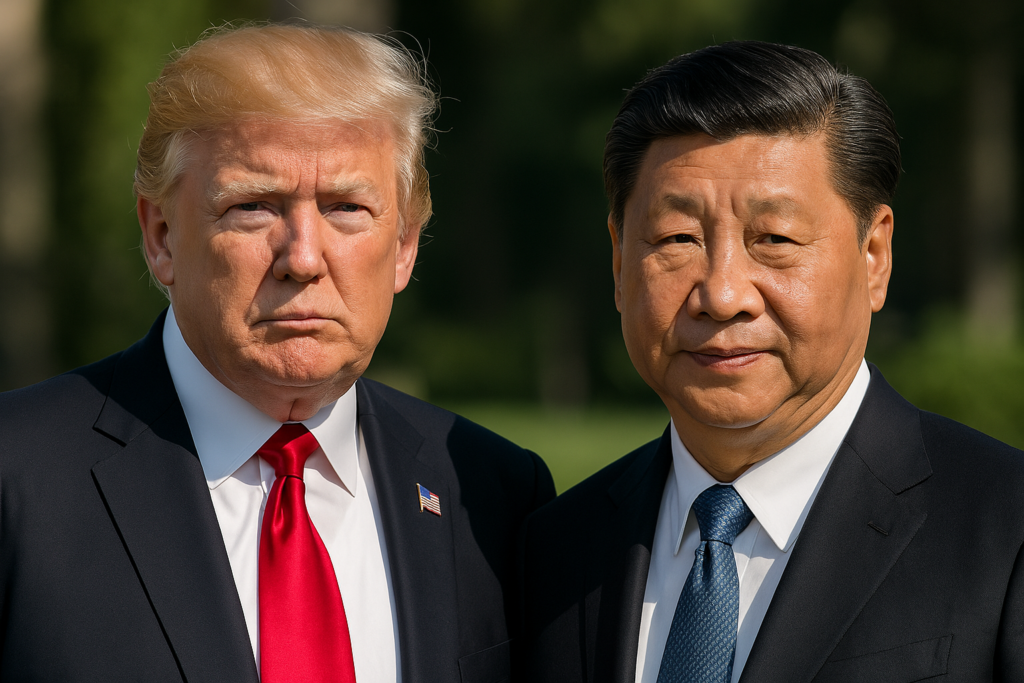
The latest escalation in the US-China trade war is threatening to shutter Amazon sellers across the US, as President Trump’s aggressive tariffs take a toll on small businesses. On April 2, 2025, Trump imposed a 125% tariff on Chinese imports, following China’s retaliatory 84% tariff on US goods. This comes after a series of tariff hikes, including a 10% baseline on nearly all US imports and higher rates on countries like Taiwan (32%) and Vietnam (46%). For Amazon sellers like Dusty Kenney, who sells baby products such as silicone spoons and bento boxes, these US-China tariffs could mean the end of their livelihoods. This article explores how Trump’s China tariffs could force Amazon sellers to close, the impact on Amazon prices, and what it means for consumers in 2025.
How Trump’s China Tariffs Affect Amazon Sellers’ Operations
Soaring Costs for Baby Products and Beyond
For many Amazon sellers, the 125% tariff on Chinese imports is a devastating blow. Dusty Kenney, a Northern California-based seller, runs Prima Stella, a brand generating $800,000 annually through Amazon sales of baby products like silicone spoons and bento boxes. With tens of thousands of products in her warehouse, the new tariffs add an “astronomical” cost. “This is my livelihood. This is how we put food on the table,” Kenney told CNBC, warning that the tariffs could put her out of business. Other sellers, like Jay Foreman of Basic Fun, a toy company with $200 million in annual sales, face similar challenges, with toy prices potentially rising by $5 to $10 per item due to the tariffs.
The Struggle to Relocate Manufacturing
Most Amazon sellers rely on China for manufacturing due to its cost-effective infrastructure. Kenney explained that while she’d prefer to manufacture in the US, the costs are double or triple compared to China, and the infrastructure isn’t there. “The people in China are hungry for the work. They’ll get back to you right away,” she said. Even shifting to countries like Vietnam or India isn’t a full solution—Trump’s tariffs on these nations (46% on Vietnam, 26% on India) make relocation less viable. William Su of Teamson, a $70 million Amazon brand, plans to move out of China within 12-16 months, but for many sellers, the financial burden of relocation could lead to closure.
How Trump’s China Tariffs Impact Amazon Prices for Consumers
Price Hikes on the Horizon
The US-China tariffs are likely to drive up Amazon prices, as sellers struggle to absorb the costs. Kenney is currently holding prices steady, but others, like Foreman, predict a 10-20% price increase within six months if the tariffs persist. For consumers, this means paying more for essentials like baby products and toys. For example, a $29.99 toy could soon cost $39.99, and Kenney’s baby spoons, already reduced from $9.99 to $7.99 due to competition, may also see a hike. Amazon’s own brands, like Amazon Basics, may also raise prices, as the tariffs undermine their low-cost advantage over national brands.
The De Minimis Loophole and Unfair Competition
Chinese sellers often use the “de minimis” loophole—allowing orders under $800 to avoid duties—to offer absurdly low prices on platforms like Temu, undercutting US-based Amazon sellers. Kenney noted that her baby spoons now compete with knockoffs sold for $3 on Temu, down from her $7.99 price. Trump’s decision to close this loophole effective May 2, 2025, aims to target deceptive Chinese sellers, but it also increases scrutiny on imports, potentially slowing down supply chains and raising costs for all sellers. This could further strain Amazon sellers, pushing some to the brink of closure.
How Trump’s China Tariffs Create Uncertainty for Amazon Sellers
A Ripple Effect Across Markets
The uncertainty surrounding US-China tariffs is making it hard for Amazon sellers to plan. With no negotiations underway between the US and China, and additional tariffs on countries like Canada (25%) and the EU (20%), the trade war shows no signs of slowing down. This volatility affects not just baby products but also electronics, textiles, and teas, as noted by sellers like Baltimore-based Zest, which relies on Chinese-grown teas. For sellers like Portable Winch Co., the 25% tariff on Canadian goods has halted US sales, forcing them to consider redirecting focus to Europe.
A Call for Domestic Manufacturing
Some businesses, like Viper Industrial, see a competitive advantage in US manufacturing, charging a premium for products like stools and shop equipment. However, for most Amazon sellers, relocating to the US isn’t feasible. “I wish I could manufacture everything here, but the costs add up quickly,” Kenney said. The lack of domestic infrastructure and high costs mean that even with huge tariffs, China remains the most viable option—until the financial strain becomes too much, potentially shuttering businesses.
Can Amazon Sellers Survive Trump’s China Tariffs?
Trump’s 125% China tariffs are pushing Amazon sellers to the edge, with many facing the risk of closure. The rising costs, competition from Chinese sellers, and lack of viable manufacturing alternatives create a perfect storm for small businesses. For consumers, this means higher Amazon prices for baby products and other goods. If you’re an Amazon shopper, consider supporting US-based sellers before prices rise further. Have tariffs affected your shopping experience? Share your thoughts in the comments, or explore our guides for navigating Amazon in 2025!